Complete this week’s assigned readings, chapters 86 & 87.
After completing the readings, post a short reflection, approximately 1 paragraph in length, discussing your thoughts and opinions about one or several of the specific topics covered in the textbook readings. pertaining to politics in associations and interest groups.
-minimum 250 words
Identify which one MSN Essential most relates to your selected topic in your discussion.
• Essential I: Background for Practice from Sciences and Humanities o Recognizes that the masterâ€ s-prepared nurse integrates scientific findings from nursing, biopsychosocial fields, genetics, public health, quality improvement, and organizational sciences for the continual improvement of nursing care across diverse settings.
• Essential II: Organizational and Systems Leadership o Recognizes that organizational and systems leadership are critical to the promotion of high quality and safe patient care. Leadership skills are needed that emphasize ethical and critical decision making, effective working relationships, and a systems-perspective.
• Essential III: Quality Improvement and Safety o Recognizes that a masterâ€s-prepared nurse must be articulate in the methods, tools, performance measures, and standards related to quality, as well as prepared to apply quality principles within an organization.
• Essential IV: Translating and Integrating Scholarship into Practice o Recognizes that the masterâ€s-prepared nurse applies research outcomes within the practice setting, resolves practice problems, works as a change agent, and disseminates results.
• Essential V: Informatics and Healthcare Technologies 5 o Recognizes that the masterâ€s-prepared nurse uses patient-care technologies to deliver and enhance care and uses communication technologies to integrate and coordinate care. •
Essential VI: Health Policy and Advocacy o Recognizes that the masterâ€s-prepared nurse is able to intervene at the system level through the policy development process and to employ advocacy strategies to influence health and health care. •
Essential VII: Interprofessional Collaboration for Improving Patient and Population Health Outcomes o Recognizes that the masterâ€s-prepared nurse, as a member and leader of interprofessional teams, communicates, collaborates, and consults with other health professionals to manage and coordinate care.
• Essential VIII: Clinical Prevention and Population Health for Improving Health o Recognizes that the masterâ€s-prepared nurse applies and integrates broad, organizational, client-centered, and culturally appropriate concepts in the planning, delivery, management, and evaluation of evidence-based clinical prevention and population care and services to individuals, families, and aggregates/identified populations.
• Essential IX: Masterâ€s-Level Nursing Practice o Recognizes that nursing practice, at the masterâ€s level, is broadly defined as any form of nursing intervention that influences healthcare outcomes for individuals, populations, or systems. Masterâ€s-level nursing graduates must have an advanced level of understanding of nursing and relevant sciences as well as the ability to integrate this knowledge into practice. . Nursing practice interventions include both direct and indirect care components.
Textbook
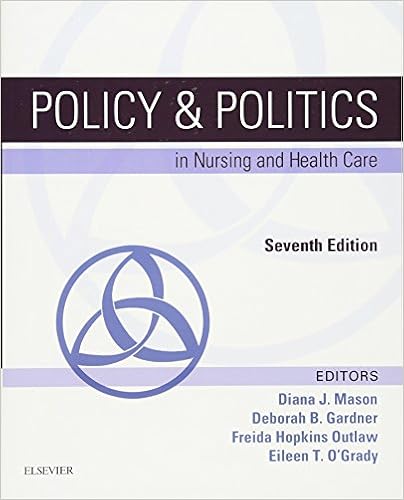
Author: Diana Mason, Deborah Gardner, Freida Outlaw, Eileen O’Grady
Publisher: Elsevier – Health Sciences Division Edition: 7th, Seventh, 7e
Year: 2016
ISBN 13: 978-0323241441
ISBN: 0323241441
“Looking for a Similar Assignment? Get Expert Help at an Amazing Discount!
Use Discount Code “Newclient”for a 15% Discount!”


The post reflection 3 3 appeared first on Student Homeworks.
